

26 novembre 2025
A practical Guide to Fostering Constructive Engagement Between Companies and Affected Communities

The UN Global Compact Network France releases the English edition of its practical guide ‘Businesses – Affected Communities, Adopting a Human Rights-based Approach for Meaningful Engagement and Effective Impact Management’. First published in French in March 2025, the guide provides companies with a clear framework to build lasting relationships, grounded in transparency, trust and respect, with communities affected by their operations or value chain. It offers practical tools to better prevent and manage negative impacts, while strengthening positive contributions through continuous, responsible dialogue with affected populations.
A COMMITMENT TO RESPONSIBLE AND SUSTAINABLE PRACTICES
The guide encourages companies to align their practices with international human rights standards, including the United Nations Guiding Principles on Business and Human Rights and the OECD Guidelines for Responsible Business Conduct.
This document promotes an approach based on:
- acknowledging and respecting community rights, fostering fair and lasting relationships;
- a proactive and structured due diligence process, including the prevention, mitigation and remediation of adverse impacts on communities and their ecosystems.
« Far from a top-down or purely regulatory approach, this publication invites us to establish a genuine culture of dialogue and cooperation, recognising the diversity of cultural and social contexts (…) What is at stake here is our relationship with others: understanding, respecting and articulating different cultures so that together we can build a fairer, more sustainable future » says Nils Pedersen, Executive Director of the UN Global Compact Network France.
« Paying attention to what makes a community fragile implies an authentic dialogue on the social relationships, culture, economy and ecological balances that underpin it. This requires a shift in focus, to ensure compliance with international standards and a fair sharing of value, and an awareness that some things are priceless » says Dominique Potier, French Deputy of Meurthe-et-Moselle’s 5th constituency, Rapporteur for the French law on due diligence obligations of multinational companies, adopted in February 2017.
« In concrete terms, this guide explains what to do, how to do it and why to do it, in clear language and without avoiding complexity. It encourages us to take action », says Nadia Bernaz, Director of the EU Jean Monnet Centre of Excellence on Corporate Sustainability and Human Rights Law Wageningen University, Netherlands.
A PRACTICAL TOOL DESIGNED FOR ALL TYPES OF COMPANIES
This guide is designed for companies across all sectors, whether they interact directly or indirectly with communities affected by their activities, products or services. All businesses, to varying degrees, can generate impacts on these communities. The guide is particularly relevant for large companies that engage directly with affected communities, either themselves or through their business partners.
This document provides practical tools to:
- understand key concepts and the applicable legal framework;
- structure engagement with affected communities and their legitimate representatives;
- strengthen due diligence and risk management processes.
A TIGHTENING REGULATORY FRAMEWORK AND INCREASED SCRUTINY
Companies operate within a fast-evolving legal landscape concerning human rights and environmental protection. While the Global Compact consistently emphasises the need for companies to align with international standards, the guide also reflects new European regulations such as the Corporate Sustainability Reporting Directive (CSRD), the Corporate Sustainability Due Diligence Directive (CSDDD), and the EU Regulation on deforestation-free products (EUDR).
Autres actualités

Le PNUE explore les trajectoires possibles après le dépassement du seuil de 1,5°C
17 septembre 2026
Le PNUE analyse les trajectoires climatiques après un dépassement de 1,5 °C. Son rapport Limiting Overshoot examine les leviers permettant de limiter l’ampleur et la durée du dépassement, puis de redescendre : réduction des émissions, adaptation et élimination du CO₂.
- #Climat #ONU


De la VSME à la Voluntary Standard : ce que change l’Omnibus
15 septembre 2026
Cadre volontaire pensé pour les PME, la VSME devient, avec l’Omnibus, la norme de référence pour toute entreprise de moins de 1 000 salariés, et plafonne les demandes des grandes entreprises.
- #PME #Reporting RSE
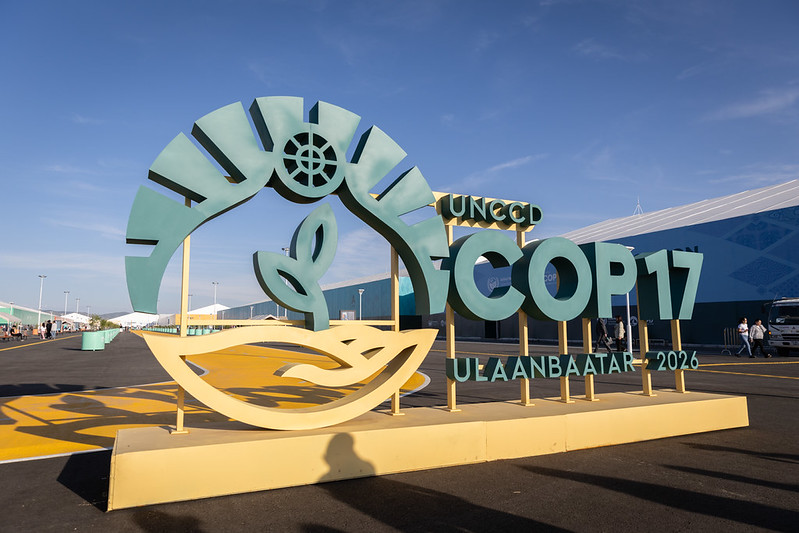
Santé des sols : retour sur la COP17 désertification
8 septembre 2026
La désertification et la dégradation des sols concernent désormais directement la France et les entreprises. La COP17 Désertification, organisée en Mongolie en août 2026, a mis en avant les enjeux de restauration des terres et de résilience face à la sécheresse. Retour sur les principaux enseignements de cette édition.
- #Biodiversité #Climat #ONU